

Written by Allison Homer, Resilient Fairfax Program Manager
Happy Flood Awareness Week! We hope that by now you are swimmingly familiar with key flood awareness tips, such as what to do if there is floodwater in the roadway (“Turn Around Don’t Drown!”), how to sign up for flooding alerts (Fairfax Alerts), and where to report flooding issues (Contact Maintenance and Stormwater Management or Virginia Department of Transportation).
If you’ve sailed through the basics, you may wish to explore deeper waters, or longer-lasting actions to adapt and boost your flooding resilience at home. As the climate gets warmer, wetter, and weirder and our land continues to develop, we are seeing more intense flooding and flash flooding events. This trend may make you feel inundated with stress, especially if you live in a home that is flood-prone or if you’ve been through repeated flood damage. Let’s drain those worries with some good news — there are many things you can do to buoy your resilience to flooding!

Here are 10 ways to buoy your flood resilience at home:
Shallow Water (Lighter Effort):
- Clean out drains, gutters and downspouts. Clearing out debris helps water drain out and away from your property during heavy rainfall.
- Plant a climate-resilient tree. Some tree species are more likely to survive flooding and other climate hazards. Additionally, some species help us reduce flooding by absorbing large amounts of stormwater.
- Find a resilient tree from the new Resilience of Trees in Fairfax County (PDF) list.
- Find a resilient tree from the new Resilience of Trees in Fairfax County (PDF) list.
- Get flood insurance. Did you know that most homeowners’ and renters’ insurances don’t cover flooding? Even if you don’t live in a floodplain, you still may be vulnerable to urban flooding, which can cause thousands of dollars of damage. Protect your property, financial wellbeing and peace of mind with flood insurance. Fairfax County residents are eligible for a 20-25% discount!
- Find more information on FEMA's Floodsmart website.
- Find more information on FEMA's Floodsmart website.
- Purchase temporary flood barriers and/or sandless sandbags. Store them during normal times and set them before a flood to keep floodwater out of your home.
- Apply for a 50% reimbursement through the Flood Mitigation Assistance Program (FMAP).
- Apply for a 50% reimbursement through the Flood Mitigation Assistance Program (FMAP).
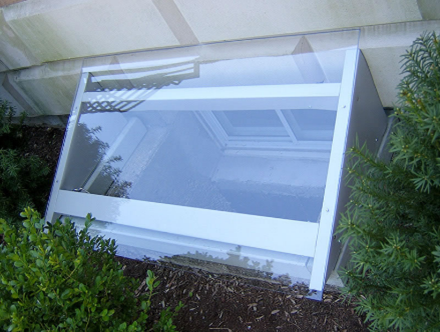
- Install basement window covers. Floodwaters often enter homes through basement windows. Use a basement window cover or other similar protection.
- Apply for a 50% reimbursement through the FMAP.
Rising Tide (Medium Effort):
- Move anything that is blocking a water path (“overland relief path”). Have you ever noticed a path of water flowing across your property when it rains? Can the water flow freely off your property back to its waterway home? If that water path is blocked by a fence, shed or other object, that blockage may cause flooding on your property. Make room for runoff by moving objects or raising the bottom of the fence.
- Elevate critical equipment to avoid flood damage. Floodwater can damage critical equipment such as your HVAC system, washers, dryers and water heaters. Keep your equipment safe and operational by elevating it.
- Apply for a 50% reimbursement through the FMAP.
- Apply for a 50% reimbursement through the FMAP.
- Install a rain garden. Rain gardens act as a natural “bowl” to collect and absorb rainwater, reducing stormwater runoff and flooding. They also provide wildlife benefits!
- Apply for an 80% reimbursement through the Virginia Conservation Assistance Program (VCAP).

High Water Mark (Advanced Effort):

Example of a living shoreline (Photo source: VASWCD) Reduce the amount of hardscape (impervious cover). When there is too much pavement, rainwater cannot sink into the ground and flooding gets worse. Reducing pavement on your property can reduce flooding and stormwater runoff!
- Apply for incentive payments through the VCAP.
- Apply for incentive payments through the VCAP.
- If you live along the water, upgrade to a Living Shoreline. Due to a Virginia Code update, if your property is along a coastal or tidal body of water and currently has grey infrastructure, you are likely required to maintain a living shoreline. Assistance is available to upgrade to a living shoreline, improving coastal resilience and water quality.
- Learn about Living Shoreline permitting with Land Development Services.
- Apply for up to 80% reimbursement through the VCAP.
Looking for more? This blog is just a sprinkle of information on flooding resilience and adaptation. There are many additional actions to take and resources to review to boost your flooding knowledge.
More Resources:
- Assistance Programs:
- Informational Resources:
- Fairfax County Public Works and Environmental Services
- Fairfax County Emergency Management
- Resilient Fairfax

Allison Homer is the Resilient Fairfax Program Manager and a climate planner for the Fairfax County Office of Environmental and Energy Coordination. In her role, she coordinates with staff from 25+ county agencies to help the county create climate-ready communities, resilient infrastructure and buildings, and adaptive environments. She holds an environmental Master of Urban and Regional Planning (MURP) degree, a Global Master of Natural Resources (GMNR) degree, and a Graduate Certificate in Global Sustainability from Virginia Tech, in addition to a Bachelor’s degree from Wake Forest University. She is certified by the American Institute of Certified Planners (AICP) and a LEED Accredited Professional for Neighborhood Development (LEED AP ND).
Climate Matters is the blog of Fairfax County’s Office of Environmental and Energy Coordination, where we share stories, insights and information related to climate change and environmental sustainability. Posts are written by knowledgeable and passionate OEEC staff members and guest authors. To read all blog posts, visit Climate Matters.