


(Posted 2026 June)
Meet Larry Peacock – ADAPT Co-Facilitator and HASA Volunteer
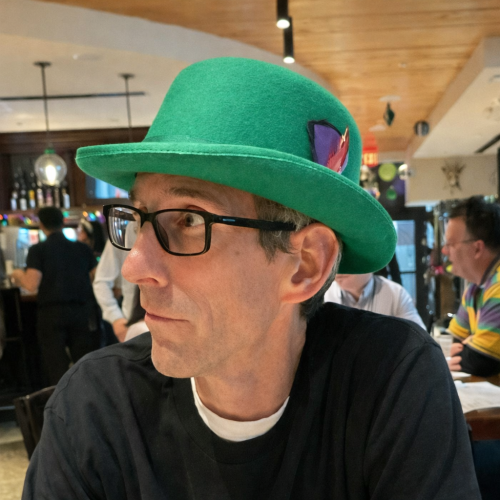
Tell us a little about yourself. What is your professional background?
I am a native of Northern Virginia, born and raised in Fairfax County. In my previous life I was a public schoolteacher. Now, I am working on my master’s degree in social work from George Mason University. My goal is to work for the Department of Family Services in either Child Protection Services or Foster Care & Adoption.
How long have you been volunteering? What led to your initial desire to volunteer and serve others?
I have volunteered with DSVS since September 2025. Giving back has also been an ongoing part of who I am. Growing up, my family took care of over 200 foster children. So, I have seen firsthand how people can be present to support one another in times of need. I want to continue supporting those systems in which my parents invested so much of their time and energy.
What interested you in volunteering with Fairfax County’s Domestic and Sexual Violence Services?
The understanding that student success is often more than just organization or motivation issues is what pushed me in this direction. I have seen how instability and violence at home show up in classrooms long before anyone names it. Volunteering with DSVS felt like a way to get closer to the root of those issues instead of just managing the symptoms. I want to be close to the people who need support, stability, and empathy the most, and to show up in a way that is direct and useful.
What is the most challenging part of volunteering? How did you overcome this challenge?
Processing the realization that many people have experienced trauma and knowing we are not in the business of solving problems. This causes frustration. As a co-facilitator it is not my job to fix anything. It is to be present, listen, and provide support at the time they need it. I don’t think I’ll ever say I have overcome the frustration. The closest I’ll get is to keep reminding myself, and those I work with, that we’re all doing the best we can with we’ve got … and if we’re doing that, it’s enough.
What’s the best part of volunteering? Share your most memorable experience.
The best part is the collaborative spirit that is ever-present in DSVS. I am a newly minted co-facilitator, so I am going to share my experience from my first volunteer appreciation potluck. I was nearing the end of my shadowing and somewhat apprehensive about the next steps. I had many conversations with DSVS staff and volunteers, but the opportunity to speak with the Division Director Keesha Coke helped assuage my concerns. Though I have never had a moment where I felt unsupported (shout out to Caroline Croghan), it was reassuring to feel that from the leadership.
What has been your favorite training? What did you like about it? What did you learn?
Though it sounds weird to say out loud, my answer to this question is the Tier I Sexual Violence Training. The collection of professionals brought in to guide the conversations left me feeling very capable of being present for someone who has endured the unthinkable. The advocates, lawyers, police officers, and social workers all shared candidly about what this path entails with eloquence.
What are your three greatest strengths? How have you been able to display and use these strengths when serving others?
My three greatest strengths are building trust, staying steady when things get hard, and meeting people where they are. As a teacher and now in social work, I have worked with people who have no reason to trust systems, so I focus on being consistent and doing what I say I will do. I do not get rattled when things get tense, which helps keep situations from getting worse. I also listen more than I talk so I can understand what someone actually needs instead of guessing.
What advice do you have for people who may be thinking about becoming a DSVS volunteer?
Remember that behavior does not exist in a vacuum. Everyone is doing the best they can with what tools biology and his or her experience have provided. Take time to process what you will learn from clients and commit yourself, as best you can, to unconditional positive regard. We're here to support.
What do you wish you could do more of as a volunteer?
I wish I could spend more time in direct contact with the people we serve. Being able to sit with someone, listen, and be present is where I feel most useful. I would also like more opportunities to keep building my skills through training and hands on experience. The more prepared I am, the better I can show up when someone needs support.
What are some of your hobbies and interests?
Outside of work and school, I enjoy spending time with my wife and kids. We’re hikers and bikers, so traveling to places near state and national parks is usually part of our vacation plans. I’m also a big fan of fantasy and storytelling, including Dungeons and Dragons. It is a creative outlet that lets me explore different perspectives and unwind. I am hoping someday my professional practice will include clinical dungeon mastering, which is a thing.
This article posting is part of the Domestic and Sexual Violence Services' Volunteer Voices monthly newsletter for current and potential volunteers. If you're not already a volunteer, learn how to get involved. Find out about upcoming trainings, volunteer trainings, happenings around the DSVS office and information about articles, books, media recommendations and more.
Learn more about the Domestic and Sexual Violence Services (DSVS).