Each newsletter will include this section to help share reviews, spotlight the people who support Domestic and Sexual Violence Services, recognize birthdays and list upcoming trainings and meetings.
Reviews

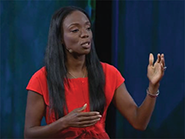
Armchair Expert with Dax Shepard: “Dr. Elizabeth Letourneau and Luke Malone on Child Sexual Abuse Prevention”
Armchair Expert with Dax Shepard is one of the country's top podcasts, where Dax and his co-host, Monica, interview celebrities, academics, and professionals in various fields. In this episode, Dax and Monica interview two child sexual abuse prevention researchers and specialists. The researchers discuss the dynamics of child sexual violence and how we can reduce the victimization of children across society.
The biggest thing that stuck out to me in this podcast was its focus on prevention, as opposed to being reactive to the issue. The experts pointed out that when we focus our approach on the criminal justice system, we are only addressing the issue once a child has already experienced violence. This is important work, but it only supports those who have reported--and often does not fix the future issue.
They focused on two key areas: education and rehabilitative support. In terms of education, they pointed to statistics that showed that 70 percent of child sexual violence is caused by another minor. This is related to early education about sexual health, consent, and appropriate behavior as children move through puberty and into adulthood. This reminded me of the work my colleagues do in DSVS. We have a robust Teen Advocacy program. The Prevention, Education, and Coordination Team regularly runs trainings with teachers and educators to prepare them with information and tools for discussing these topics with young students. The team also provides feedback on Family, Life, and Education curriculum for Fairfax County.
When it came to rehabilitative support, Dr. Letourneau and Mr. Malone discussed several areas of support, including support for individuals who have caused harm and support for individuals who have sexual thoughts about children but have never caused harm. They pointed out that support for both is important, as some people struggle with pedophilic thoughts but recognize the issue and they never want to harm a child. These individuals need a non-judgmental space to heal and practice healthy coping mechanisms. Additionally, some people are “situational offenders” who do not necessarily have attraction to children, but they cause harm because of larger situational influences and personal risk factors. These individuals do need intervention from the criminal justice system, but they also need specialized support to interrupt their unhealthy and harmful patterns of behavior.
This conversation pointed to the benefits of the ADAPT program in DSVS. Though ADAPT is not specifically focused on harm against children, it does recognize that purely punitive forms of accountability are not enough to stop harm in our communities. The DSVS ADAPT team does amazing work to help people build tools so they can move forward in society without causing additional harm.
I found the podcast very interesting and nuanced. Because of the subject matter, it is at times difficult to listen to. However, Dax and Monica do a great job at pointing out how this discomfort and bias against those who have caused harm can often inhibit our ability to provide meaningful support, and in the long run, create safe communities for children.
This review was written by Volunteer Manager Caroline Croghan.
Birthdays

- Jennifer Hong - 10/8
- Shawn Desai - 10/09
- Molly McMahon - 10/9
- Ashley Weston - 10/10
- Corrine Braxton - 10/24
- Dipti Maniar - 10/25
- Sophie Traux - 10/27
- Amy Talley - 10/31
Test Your Brain
Can you find the ghost?
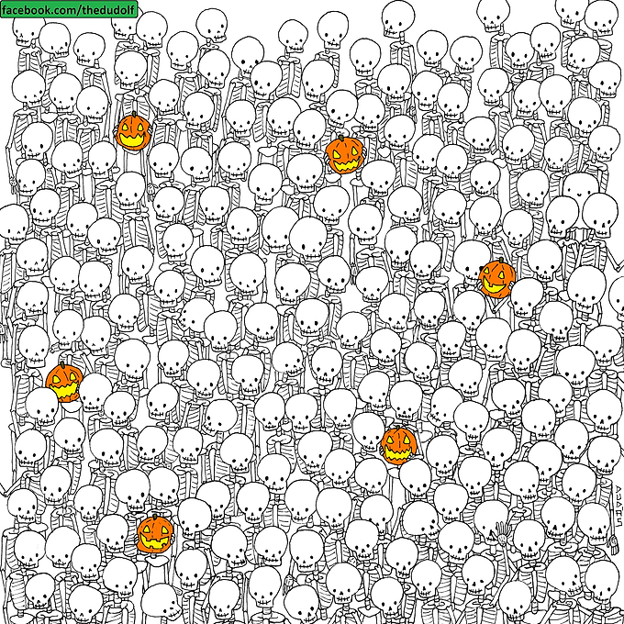
Answer Key
Events and Educational Resources
Love, Power, and Homicide: When Intimate Partner Violence Turns Fatal
Thursday, Oct. 1, 2026
9–10:30 a.m.
This course examines the deadly progression of intimate partner violence (IPV), highlighting how coercion, control, and escalation can lead to intimate partner homicide (IPH). Using case studies and experiential investigative analysis, students will identify warning signs, assess risk factors, and explore best practices for investigating potential IPH. The course emphasizes the role of power and control in abusive relationships and evaluates systemic responses that may either prevent or contribute to fatal outcomes. Students will also learn to communicate with surviving family members and next of kin using trauma-informed, compassionate approaches. This training series is free, but registration is required. advance for the training. Questions? Contact Tricia Everetts, DCJS Victims Services Training and Communication Coordinator.
Stalking Training
Wednesdays, Oct. 14, 21, & 28, 2026
1-3 p.m.
Virtual
Registration for this three-part webinar series on stalking is open. Participants will learn how to identify stalking behaviors and dynamics, assess danger in stalking cases, and apply strategies for enhancing victim safety. Questions? Contact Abby Picard.
Domestic and Sexual Violence Community Annual Meeting
Friday, Oct. 16, 2026
Fairfax County Government Center
Atrium and Board Auditorium
12000 Government Center Parkway
Fairfax, VA 22035
8:30-11:30 a.m.
Join the Council to End Domestic Violence, the Domestic Violence Network, the Sexual Assault Response Team, and the Fairfax County interpersonal violence community as they celebrate the milestones met over the past year and recommit to continuing the work until everyone is safe. Featured events include a networking breakfast, an art project, and the domestic and sexual violence Community Awards.
Domestic Violence Tier 1
Wednesdays & Thursdays Oct. 21-Nov. 18, 2026
6-8 p.m.
Virtual
Note: There will be no session on November 11 due to Veterans Day
Registration for the fall session of Domestic Violence Tier 1, a 16-hour training on the dynamics of domestic violence, systems responding to domestic violence in Fairfax County, and resources available in our community, is now open. Questions? Contact Abby Picard.
Purple Thursday!
Thursday, Oct. 22, 2026
Turn Fairfax County purple to support survivors of domestic violence. Wear purple, take selfies, and tag the Department of Family Services on Facebook. Send photos to Abby Picard.
Make a Note!

Please take a moment to log on to your Volunteer Management System (VMS) account and log your hours for the month of September. Please also log any time you spent on training under “volunteer training.” If you do not see this selection under your opportunities, please email Caroline Croghan, and she will log on to add it to your account.
Please enter your hours for each day you volunteered and not as a lump sum. If you need to log hours for a previous month, please email Caroline Croghan to let her know so she can be aware of the entry and expedite the approval process.
Parting Shot
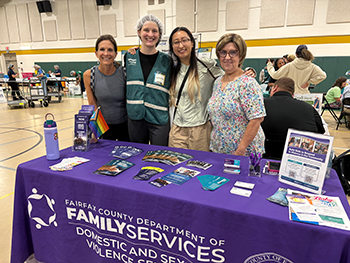
Lynne Shapiro, Volunteer Manager Caroline Croghan, Dorothy Li, and Karen Bilak set up shop at VolunteerFest.
DSVS Wants You!
Interested in becoming a volunteer? Contact Caroline Croghan.
Check out past issues of Volunteer Voices.