Park Authority

CONTACT INFORMATION: Open during regular business hours 8 a.m. - 4:30 p.m., Monday - Friday
703-324-8700 TTY 711
12055 Government Center Pkwy.
Fairfax, Virginia 22035
Jai Cole
Executive Director

Department Resources

Related Resources

Invasive Species: Running Bamboo

running bamboo

Bamboo is a tough grass species with rapidly growing rhizomes that grow above ground and as deep at three feet underground parallel to the surface. Rhizomes are horizontal stems, shoots and roots that grow above and below ground. There are over 1600 species of bamboo throughout the world, many of which have been introduced to the County.

In response to the January 1, 2023 Fairfax County Bamboo Ordinance, the Board of Supervisors approved $400,000 in annual fiscal funding to manage bamboo on Fairfax County Park Authority (FCPA) parkland. The FCPA faces a unique challenge in its efforts to remove bamboo from all its properties due to the sheer size of its parkland — the significant acreage affected by bamboo (estimated to be over 250 acres) and the complexity and costs of bamboo removal.   Bamboo control projects on parkland are currently underway by Park Authority ecologists and FCPA will continue to collect information and complaints.

The new ordinance requires property owners to contain running bamboo on their property and prevent it from spreading beyond their property line. Property owners may incur penalties if they allow bamboo to spread beyond their property.

To report running bamboo spreading, please submit a Running Bamboo Report Form below.

To locate property owner information for reporting,  please use Fairfax County - Property Location Search or Jade, the County viewer with tools for mapping to find properties.

Park Amenity Locator

This application provides general information for locating our parks and a broad description of the amenities within them.

For a full screen version of this web application, click below.

View in Full Screen

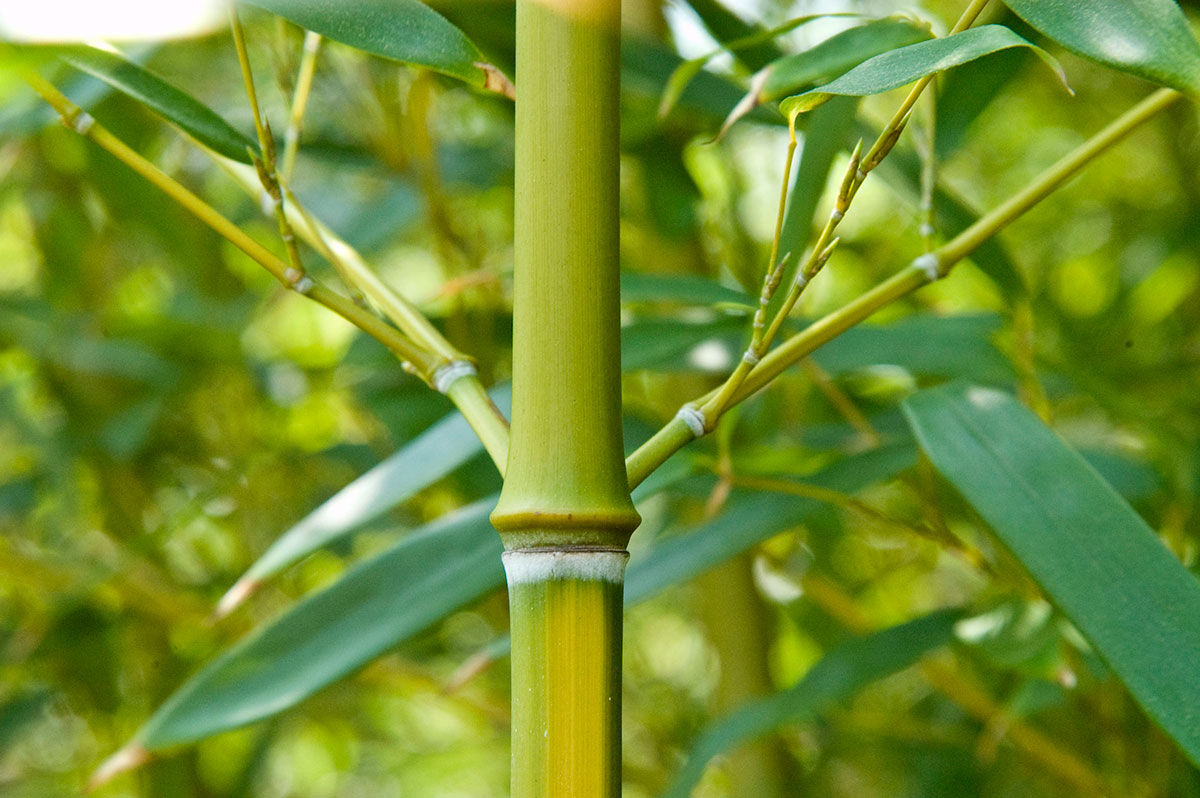
Culm

Culm

Culms are the upright stems, also known as canes.

Rhizome

Rhizome

Rhizome are perennial stems that run horizontally underground and contribute to the spread of the colony; they grow roots and culms as they travel.

Nodes

Nodes

Nodes are the joints between sections of culm or rhizome, and are the point from which leafy branches or roots emerge; in bamboo, the nodes are solid.

Shoots

Shoots - new culm growth

The culm is tender and can easily be knocked over.

Note: You must adhere to Chapter 118 of the Fairfax County Code, the Chesapeake Bay Preservation Ordinance when removing vegetation. To determine if your property is located within the RPA, please refer to the Chesapeake Bay Map on Fairfax County’s Digital Map Viewer. For more information regarding the RPA, including frequently asked questions, forms and contact information, please visit Chesapeake Bay Preservation Ordinance website. For additional assistance, please contact Land Development Services (LDS) Site Development and Inspection Division at 703-324-1720, TTY 711, or via email at LDSSiteQuery@fairfaxcounty.gov.
 
For more information about bamboo and Land Disturbance, Resource Protection or Easements, please visit: Running Bamboo website.

Digging Bamboo

Bamboo is a tough grass species with rapidly growing rhizomes that grow above ground and as deep at three feet underground, parallel to the surface. The rhizomes and roots require complete removal. Rhizomes left behind will most likely resprout. Trenching to install a root barrier may be an option. The root barrier should be 36” in height, with approximately 30” below ground, and 6” above ground.

Mowing Bamboo

Mowing may reduce growth and eventually kill the plant. If bamboo reaches an area where it can grow without being controlled, it will continue to spread from that location. Mowing bamboo could take more than two years of frequent mowing before seeing impacts to the plant.

Chemical Treatments

NOTE: Various herbicides are available to kill bamboo but should always be used in strict accordance with the label’s instructions. THE LABEL IS THE LAW.

Treating with chemicals may require multiple years of treatment. Bamboo infestations may take between two to five years to control with frequent and long-term monitoring. After cutting down the culms of bamboo, wait for the leaves to resprout before treating with herbicide. Cutting down the plant during the spring or summer will allow the plant to resprout enough leaves to treat with herbicide. It is recommended to use six percent (6%) glyphosate and a surfactant or spreader-sticker for treatment. A surfactant or spreader-sticker is needed to effectively treat the waxy leaves of the plant. Be cautious with applications, follow chemical labels and never use if bamboo is growing in wetlands or near water.

For more information on using chemicals to control invasive plants, please visit:

Other Bamboo Removal Tips

Bamboo culms and shoots should be cut to six feet (6 ft) for disposal. 
Digging out bamboo requires heavy equipment and coordination with Virginia 811.

More information about Bamboo Removal:

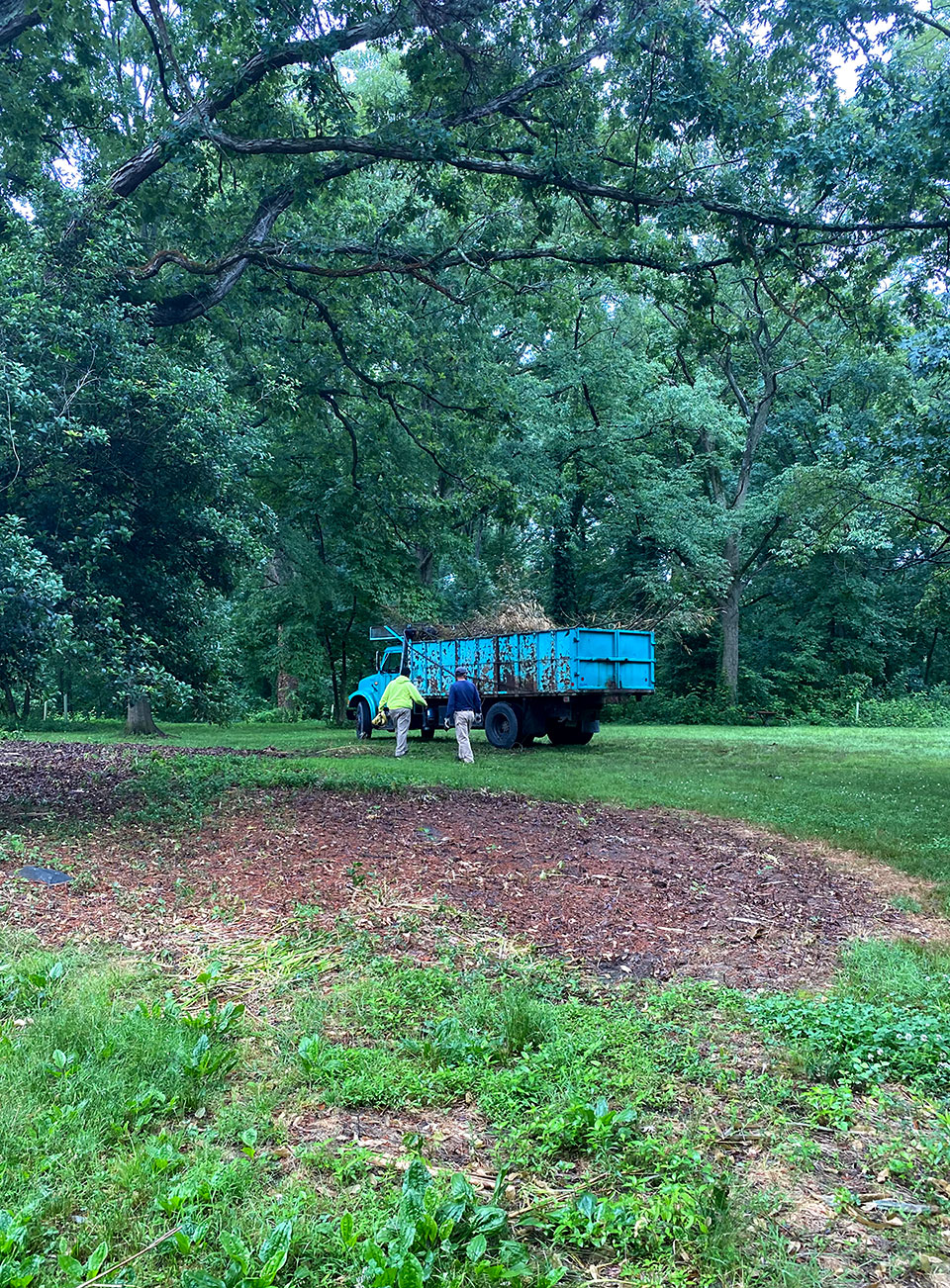
Gil McCutcheon Park bamboo removal is a success story in the challenge to control running bamboo. The photos demonstrate the long process of removing a large, tall and dense patch of bamboo. The Park Authority worked with the park IMA Site Leader, neighborhood partners, a contractor and other Park Authority Divisions and Agencies to cut, remove and treat the bamboo.

Gil McCutcheon Before Removal
 
Gil McCutcheon First Pile
 
Bamboo Shoots After Gil McCutcheon Removal
 
Gil McCutcheon Before Removal
 
Gil McCutcheon Bamboos in Truck
 
Gil McCutcheon After Removal
 
Gil McCutcheon IPC Cutting
 
Gil McCutcheon Bobcat Hauling Bamboo
 
Gil McCutcheon After Removal
 
Fairfax Virtual Assistant